

For more than 15 years, alcohol controlled my life.
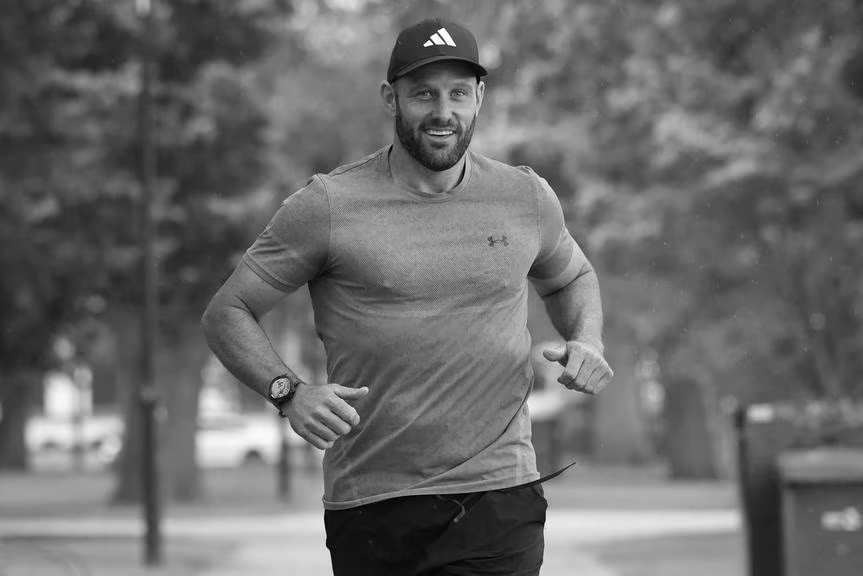
Three years ago, I hit rock bottom. I was lifted into an ambulance, too sick to walk, and my organs were shutting down. It almost killed me. Today, on the eve of my 44th birthday, I'm journeying from Adelaide to Melbourne on foot to prove that with the right support, recovery is possible.
I grew up in a completely normal family.
We did normal things, like every other Australian I knew. I went to a normal school and, for the most part, life felt pretty typical.
I probably started drinking around sixteen, at the odd party here and there. It didn’t seem like a big deal. Drinking was always part of the culture. Mum and Dad might have a glass of wine after work at home, a couple of beers on the weekend. That felt normal.
Over time, my drinking gradually shifted from casual to heavier binge drinking. Like a lot of people at that time, I would get pissed on a Friday or Saturday night, then laugh about it the next day. I was always fairly active and fairly fit. I went to uni, had a job, played footy. Writing yourself off and having a hangover on a Sunday was the standard.
Slowly, what had been the norm became a coping mechanism. After a few bad relationships, stress and jobs I hated, drinking crept further into my life and became my go‑to instead of dealing with what I was battling internally. The coping mechanism grew: first weekends, then weekdays, then every day.
……..
I was probably what you’d call a functioning alcoholic, but day by day, month by month, year by year, everything started to go wrong. Things began to crumble, then the wheels came off. I kept shifting the blame away from the real problem that I, and probably many people around me, knew was there: my excessive drinking. It wrecks everything.
Eventually, alcohol took complete and utter control of my life. The coping mechanism wasn’t a coping mechanism anymore; it was a cycle, a day‑to‑day battle with addiction. I became so over it that I stopped caring. I lost my will to live as I watched my world fall apart.
I went to rehab once and started to do well, but deep down, I knew something still wasn’t right. While I was in that rehab, my dad passed away on Christmas Day. It affected me more than I let on, and I hit rock bottom again. The cycle continued, and my health really started to suffer.
I didn’t know what to do. All I wanted was to stop. It was horrific. I wouldn’t wish it on my worst enemy. My mum stood by me when she could have, and probably should have, walked away. I was in and out of hospital, trying to detox, trying to stop. It would work for a little while, and then I’d hit rock bottom again, looking at my life, where I was, feeling deeply ashamed.
The fact that I was a 40‑year‑old man in that situation left me feeling pathetic. I felt like life wasn’t worth living. The only thing that kept cutting through the fog was the thought that I was a father, and I wasn’t really there for my daughter. I was there, but I wasn’t there.
……..
Eventually, the facts were on the table: it was either death or go to rehab. I’d already been through the cycle of going into hospital, detoxing, feeling a bit better, getting released, and ending up back in the same place. It didn’t work. I knew I had to get into rehab if I wanted to survive and be a father again.
When I finally got my chance at Windana, I grabbed it. I remember thinking, “I’m never doing this again. I’m doing it, and I’m doing it right.” I’ve stuck to it ever since.
The reason I’m running from Adelaide to Melbourne is that I’ve felt compelled to do something. Windana helped save my life, and I want to spread the word about that. About how a place like this can give a child their dad back. I want people to see that no matter how far you’ve fallen, even from complete and utter rock bottom, you can recover, you can thrive, and you can be happy again.
I’m running to shine a light on what real support can do, and to help make sure another kid doesn’t have to grow up with a dad who is trapped in addiction the way I was.